
Desk Job Movement: How I Stopped Feeling Like a Human Pretzel at Work

Advertisements
Here’s a stat that honestly scared me — the average office worker sits for about 10 hours a day. Ten! I remember reading that a few years ago while slumped in my chair, lower back screaming at me, and thinking, “Well, that explains a lot.” If you’ve got a desk job and you’ve been ignoring how stiff and achy your body feels, trust me, this one’s for you.
Desk job movement isn’t some fancy wellness trend. It’s literally about survival — or at least about not groaning every time you stand up from your chair.
Why Sitting All Day Is Wrecking You (Slowly)
I used to think I was fine because I hit the gym three times a week. Turns out, that doesn’t cancel out eight-plus hours of being a sedentary statue. Researchers call it “active couch potato syndrome,” and yeah, it’s a real thing.
Prolonged sitting has been linked to increased risks of heart disease, poor posture, tight hip flexors, and even mental health issues like anxiety. Your muscles basically fall asleep. And your metabolism? It slows way down — which I learned the hard way when my pants started getting suspiciously tight around 2019.
The Mayo Clinic puts it bluntly: sitting for long stretches increases your risk of death from cardiovascular issues and cancer. Not exactly a fun lunch break read, but it got my attention.
Micro-Movements That Actually Work
Okay so here’s where it gets practical. You don’t need to do burpees next to the copy machine. Small, consistent movements throughout the day can make a massive difference in how your body feels.
Here are some of my go-to desk job movement strategies:
- The 30-minute rule: Set a timer and stand up every half hour. Even just shifting your weight for 60 seconds counts. I use a simple phone alarm — nothing fancy.
- Seated hip circles: This one looks a little goofy, not gonna lie. But rotating your hips while sitting loosens up those tight flexors like nothing else.
- Desk push-ups: Place your hands on the edge of your desk, step back, and do 10 push-ups. I started doing these during boring conference calls and nobody’s noticed yet.
- Calf raises: Stand up, rise onto your toes, hold for a second, lower back down. Repeat 15 times. You can do this while waiting for your coffee to brew.
- Walking meetings: Whenever possible, take calls on your feet. I’ve been doing walking meetings for about a year now and my step count honestly doubled.
The Gear That Helped Me (and What Was a Waste)
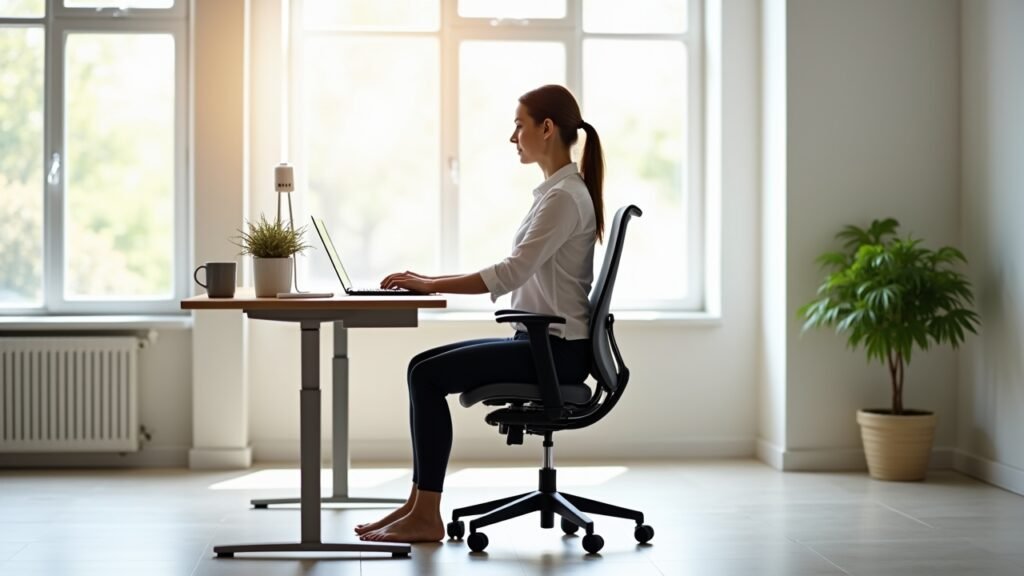
I’ll be honest, I went through a phase where I bought every ergonomic gadget I could find. Some of it was worth it. A lot of it was not.
A standing desk was probably my best investment — even a simple converter that sits on top of your existing desk works great. I alternate between sitting and standing throughout the day, and the difference in my lower back pain has been night and day. A balance board to stand on was also a solid pick because it keeps your legs engaged without you even thinking about it.
What didn’t work? That giant exercise ball I used as a chair. My core got tired after 20 minutes, my posture actually got worse, and one time it rolled out from under me during a Zoom call. So yeah, skip that one.
Building the Habit Without Overthinking It
The biggest mistake I made early on was trying to overhaul everything at once. I bought the standing desk, the resistance bands, downloaded three apps — and burned out in a week. Sound familiar?
Start with one thing. Seriously, just one. Maybe it’s standing up every 30 minutes. Maybe it’s a five-minute stretch routine before lunch. Once that feels automatic, add something else. Habit stacking is your best friend here, and there’s good science behind it through resources like James Clear’s work on habits.
Your Body Will Thank You Tomorrow
Look, desk job movement doesn’t have to be complicated or time-consuming. It just has to happen. Your joints, your back, your energy levels — they’re all begging you to move a little more during those long work hours. Start small, stay consistent, and listen to what your body’s telling you.
Advertisements
And hey, if you found this helpful, there’s plenty more where this came from. Head over to the Reset Harbor blog for more tips on feeling better in your everyday life. Your future self will appreciate it!