
Advertisements
Here’s something that absolutely blew my mind the other day. Did you know that roughly 1 in 3 adults don’t get enough sleep? I was one of those people for years, honestly. I thought surviving on five hours made me some kind of productivity warrior, but boy was I wrong!
Sleep isn’t just about feeling rested. It affects literally everything from your mood to your immune system to how well you remember where you put your car keys. So let’s dive into what the science actually says about how much shut-eye you really need.
The Magic Numbers by Age Group
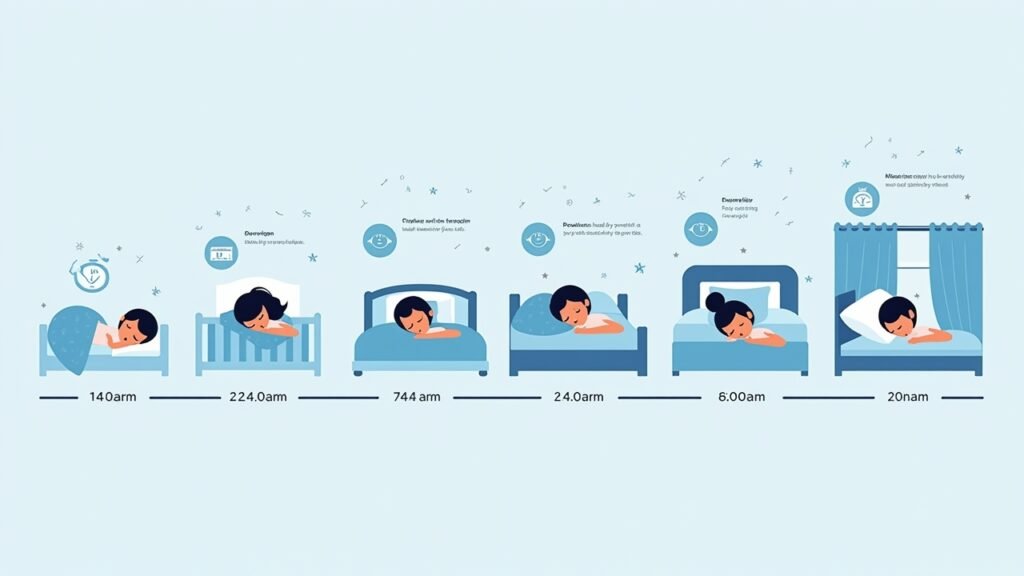
Okay, so here’s the deal. The amount of sleep needed varies pretty dramatically depending on how old you are. According to the CDC’s sleep guidelines, adults between 18 and 60 need at least seven hours per night.
But it gets more specific than that:
- Newborns (0-3 months): 14-17 hours
- Infants (4-12 months): 12-16 hours
- Toddlers (1-2 years): 11-14 hours
- Preschoolers (3-5 years): 10-13 hours
- School-age kids (6-12 years): 9-12 hours
- Teenagers (13-18 years): 8-10 hours
- Adults (18-64 years): 7-9 hours
- Older adults (65+): 7-8 hours
I remember being jealous of my teenage nephew sleeping till noon. Turns out his body actually needed that sleep for proper development!
Why Your Sleep Quality Matters Just as Much
Here’s where I made a huge mistake for years. I thought clocking eight hours was enough, but I was waking up feeling like garbage. Turns out, sleep quality is just as important as sleep quantity.
Good sleep quality means you’re actually cycling through all the sleep stages properly. You need that deep sleep and REM sleep to feel truly restored. If you’re tossing and turning all night, those eight hours ain’t doing much for you.
I started tracking my sleep with a basic app and realized I was waking up like six times a night without even knowing it. Total game changer when I addressed that issue.
Signs You’re Not Getting Enough Quality Sleep
Your body is pretty good at telling you when something’s off. Here’s what I’ve noticed in myself and what experts at the Sleep Foundation say to watch for:
- Feeling groggy even after a full night’s rest
- Needing caffeine just to function like a normal human
- Getting irritable over small stuff
- Having trouble concentrating at work
- Getting sick more often than usual
What Happens When You Don’t Get Enough Sleep
Man, I wish someone had told me this stuff sooner. Sleep deprivation is linked to some pretty serious health problems. We’re talking increased risk of heart disease, diabetes, obesity, and even depression.
There was this one week where I was working on a big project and averaging maybe four hours a night. By Friday, I literally couldn’t remember my own phone password. My brain just checked out completely.
The scary part is that chronic sleep loss builds up over time. You can’t really “catch up” on weekends either, despite what many of us believe.
Tips That Actually Helped Me Sleep Better
After years of struggling, here’s what finally worked for me. First, I made my bedroom colder. Like, uncomfortably cold at first. Experts recommend around 65-68 degrees Fahrenheit for optimal sleep.
Advertisements
I also stopped looking at my phone in bed. This was honestly the hardest habit to break, but the blue light was messing with my melatonin production big time. Now I read actual paper books like it’s 1995 or something.
Consistency turned out to be huge too. Going to bed and waking up at roughly the same time every day, even weekends, made a noticeable difference within about two weeks.
For a deeper dive into sleep science, check out this helpful video from sleep experts:
Why Sleep is Your Superpower – Matthew Walker TED Talk
Finding Your Personal Sweet Spot
Look, these guidelines are exactly that, guidelines. Some people genuinely function well on seven hours while others need a solid nine. The key is paying attention to how you actually feel.
Experiment with different sleep durations for a week or two each. Keep a simple journal noting how rested you feel each morning. Your body will tell you what it needs if you’re willing to listen.
Remember, prioritizing sleep isn’t lazy. Its one of the best things you can do for your overall health and productivity. Start tonight by setting a reasonable bedtime and sticking to it. Your future self will thank you for it! For more wellness tips and lifestyle advice, be sure to check out other posts on Reset Harbor.