The Workout Cool Down Routine I Wish Someone Had Taught Me Years Ago

Advertisements
Here’s a stat that honestly blew my mind: according to the American College of Sports Medicine, a proper workout cool down routine can reduce muscle soreness by up to 50%. Fifty percent! I spent years just grabbing my gym bag and heading straight to my car after a workout, wondering why my body felt like it was held together with duct tape the next morning.
Look, I get it. You just crushed a killer session, you’re sweaty, and all you want is a protein shake and your couch. But skipping your post-workout cool down is basically like slamming the brakes on a highway — your body doesn’t appreciate it one bit.
Why I Finally Started Taking Cool Downs Seriously
So about three years ago, I pulled my hamstring doing absolutely nothing dramatic. I finished a set of deadlifts, walked to the water fountain, and bam — my left leg just said “nope.” My physical therapist asked me about my cool down stretching routine and I literally laughed. I didn’t have one.
Turns out, when you skip the cool down phase, your muscles stay contracted and tight. Blood pools in your extremities instead of circulating back to your heart properly. That’s when injuries, dizziness, and that awful post-workout stiffness creep in.
That hamstring pull cost me six weeks of training. Trust me, spending 5-10 minutes on a proper cool down is way cheaper than physical therapy.
My Go-To Workout Cool Down Routine (Step by Step)
After a ton of trial and error, I’ve landed on a recovery routine that works every single time. It takes about 10 minutes, and honestly, it’s become my favorite part of the workout.
Minutes 1-3: Light Cardio to Lower Heart Rate
I start with a slow walk on the treadmill or just pace around the gym floor. The goal here is gradually bringing your heart rate down — not stopping cold. Think of it like easing your car into a parking spot instead of crashing into a wall.
Minutes 3-7: Static Stretching for Major Muscle Groups
This is where the magic happens. I hold each stretch for about 20-30 seconds, and I focus on whatever muscle group I just worked. Here are my staples:
- Standing quad stretch — hold your ankle behind you, keep your knees together
- Hamstring stretch — one foot on a bench, lean forward gently
- Chest doorway stretch — arms on the door frame, lean through
- Cross-body shoulder stretch — pull one arm across your chest
- Standing calf stretch — press against a wall with one leg back
- Hip flexor lunge stretch — this one’s been a game changer for my lower back pain
One mistake I made early on was bouncing during stretches. Don’t do that. Ballistic stretching after a workout is a recipe for a pulled muscle. Slow and steady wins this race.
Minutes 7-10: Deep Breathing and Foam Rolling
I’ll be honest, I thought foam rolling was just trendy nonsense until I actually tried it consistently. Now my foam roller goes everywhere with me. I spend a couple minutes rolling out my quads, IT band, and upper back while focusing on slow, deep breaths.
The deep breathing part isn’t just woo-woo stuff either. It activates your parasympathetic nervous system, which basically tells your body “hey, we’re done fighting, time to recover.” Your cortisol levels drop and muscle recovery kicks in faster.
Common Cool Down Mistakes I’ve Made (So You Don’t Have To)
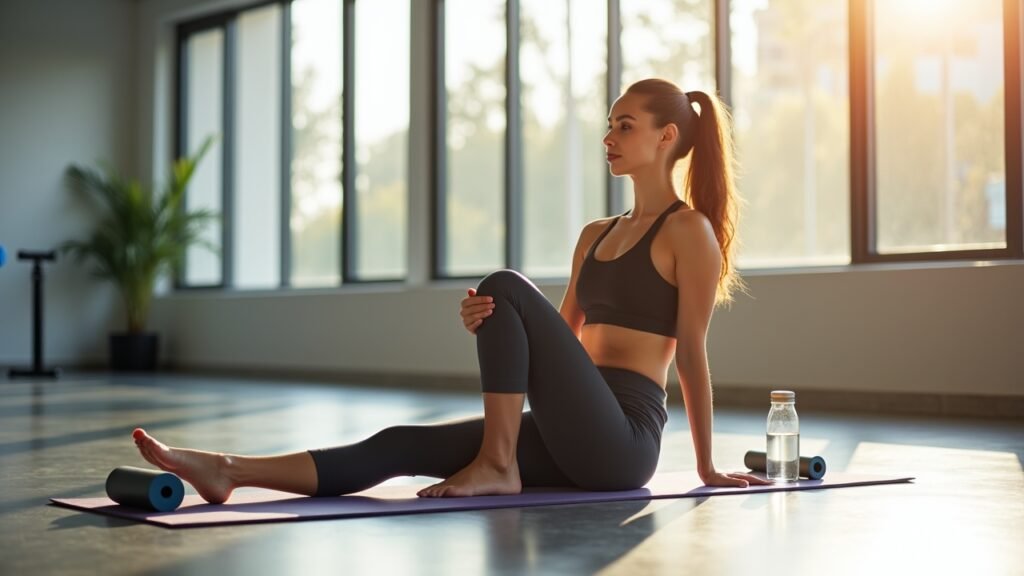
Besides the bouncing thing, I’ve messed up in other ways too. For a while I was stretching muscles I hadn’t even worked that day and wondering why I wasn’t seeing benefits. Focus your post-exercise stretching on the muscles you actually trained.
Another big one — rushing through it. Holding a stretch for five seconds does basically nothing. You need at least 15-20 seconds for your muscle fibers to actually relax and lengthen. I set a timer on my phone now because I used to cheat myself constantly.
Advertisements
Your Body Will Thank You Tomorrow
A solid workout cool down routine isn’t optional — it’s essential for injury prevention, flexibility, and long-term fitness. But here’s the thing: tweak it to fit YOUR body. If your hips are tight, spend extra time there. If your shoulders are screaming, give them more love.
Just please, listen to your body and never push a stretch into actual pain. Discomfort is fine. Pain is a red flag.
If you found this helpful, come hang out with us over at Reset Harbor — we’ve got tons of practical fitness and recovery tips waiting for you. Your future self will appreciate it!